
When patients have a choice of providers, what makes them favor one over another? In healthcare, we know the answer is complex and personal. Healthcare organizations put their best foot forward
to attract patients based on services offered, provider expertise and reputation, quality scores, and more.
Consequently, those factors apply when your organization seeks to attract and keep talent, too. And when building a winning team, one more factor applies: Executing on an effective workforce
management strategy. Beyond attracting the best professionals, it’s key to supporting and engaging staff to improve productivity, stem turnover, and achieve better clinical and non-clinical outcomes.
They’re all essential details that desirable employers don’t overlook.
Why become an employer of choice?
Solidifying your reputation as a healthcare employer of choice is essential—and getting more difficult. The healthcare workforce is exhausted from the pandemic and many are leaving the profession, creating a fiercely competitive environment for finding, hiring, and retaining clinicians and staff. Today’s healthcare organizations face voluntary turnover rates at nearly one in four workers and rising.
For example, in a three-part longitudinal study, the American Organization for Nursing Leadership documented nursing leaders’ continually worsening job satisfaction, burnout, and intent to leave the
profession. A 2021 Washington Post-Kaiser Family Foundation survey found that 30% of healthcare workers are considering leaving their profession altogether.
On top of that, by 2030 all baby boomers will reach the traditional retirement age of 65, exacerbating the losses. When they leave healthcare, they’ll take decades of accumulated skills, knowledge, and experience in what could be a mass departure due to their sheer numbers. Unfortunately, this depletion of the workforce coincides with the increased care needs of our aging population (e.g., more care for more acute and chronic conditions).
Input from the front lines
To provide workforce insights for leaders striving to make their organizations employers of choice, symplr conducted a survey that netted 206 responses. Clinicians, non-clinicians, administrators, and support staff in healthcare organizations of all sizes nationwide provided feedback on how well (or poorly) their organization equips them with resources and support to do their job and recognizes them for what they do.
The takeaway? Whether your organization is feeling the talent pinch in clinical or nonclinical roles, take heed: Healthcare recruitment and retention will become more complex and require innovative strategies and technology.
At the same time, becoming a healthcare employer of choice is crucial for your organization’s success and survival in today’s tough market. To create and execute on your workforce strategy— and, ultimately, drive staff engagement and achieve better clinical outcomes and financial results—use technology to integrate data. Then, optimize it to achieve the goals that matter to healthcare employers of choice, such as:
- Use innovative staffing techniques such as recruitment marketing to attract top talent to care for your patients and residents
- Effectively manage and create predictability in healthcare labor costs
- Align staffing with rapidly changing patient needs
- Improve clinical outcomes by ensuring that clinicians and support staff have the right credentials and competencies
- Improve staff productivity and retention
- Effectively engage staff to improve productivity, stem turnover, and achieve better key clinical and nonclinical outcome
Survey highlights
symplr posed wide-ranging survey questions to participants to gain a visual into workforce management trends in the new year and beyond. Highlights of our survey follow.
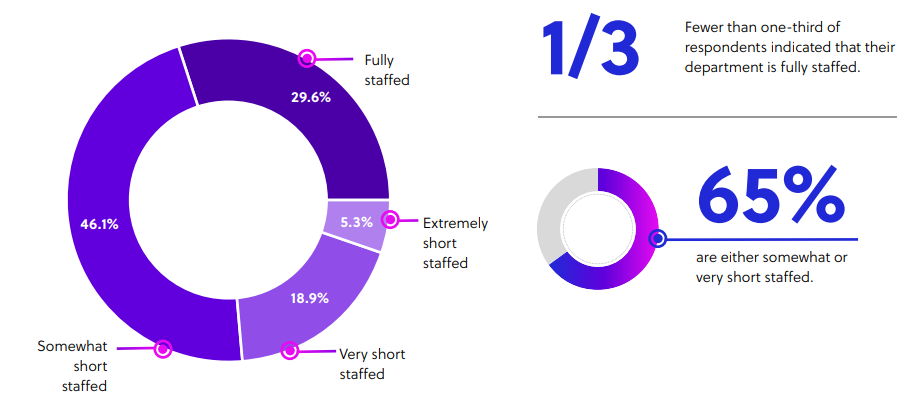
1. Is your department adequately staffed to accomplish its goals?
- Fewer than one-third of respondents indicated their department is fully staffed.
- 65% are either somewhat or very short staffed.
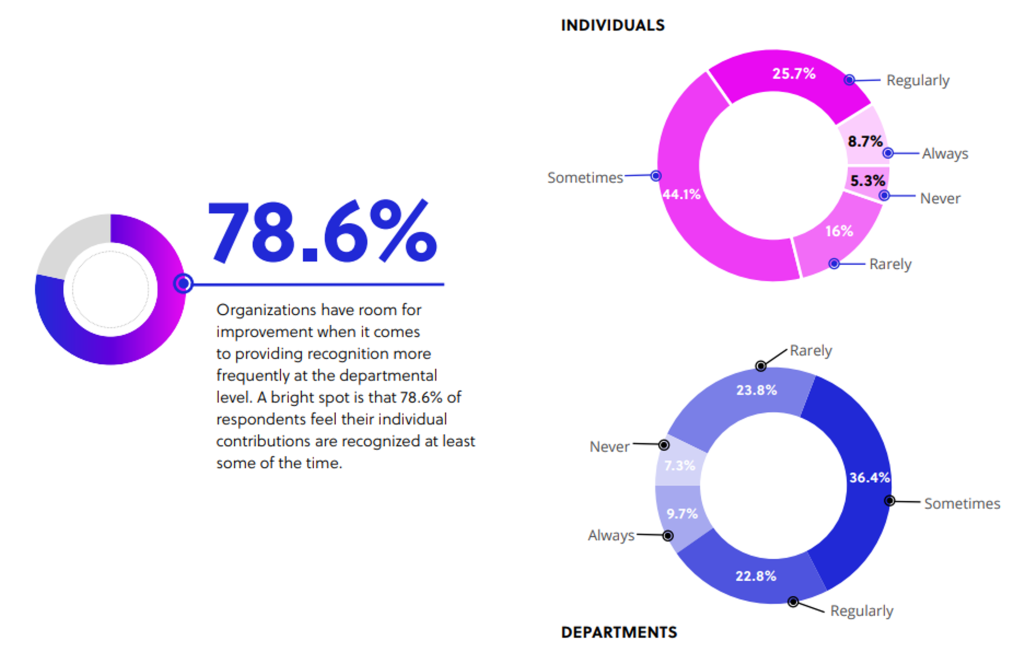
2. How often do you feel you and/or your department is recognized for your skills and/or contributions to your organization?
78.6% Organizations have room for improvement when it comes to providing recognition more frequently at the departmental level. A bright spot is that 78.6% of respondents feel their individual contributions are recognized at least some of the time.
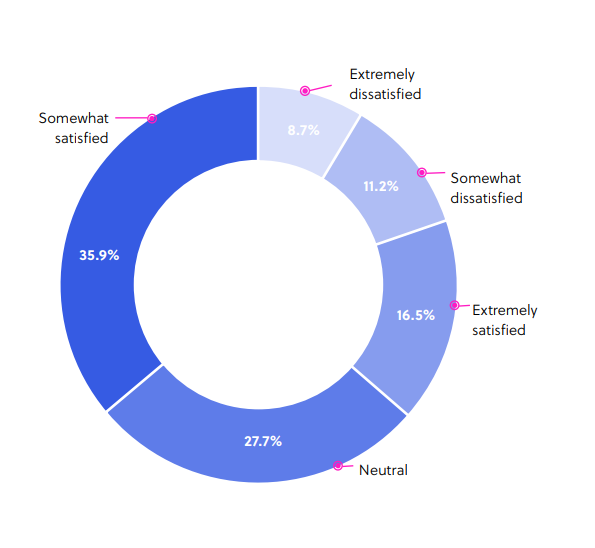
3. How satisfied are you with your career growth opportunities in your organization?
More than half of healthcare employees are somewhat or extremely satisfied with the career growth opportunities in their organization.
4. How often do you:
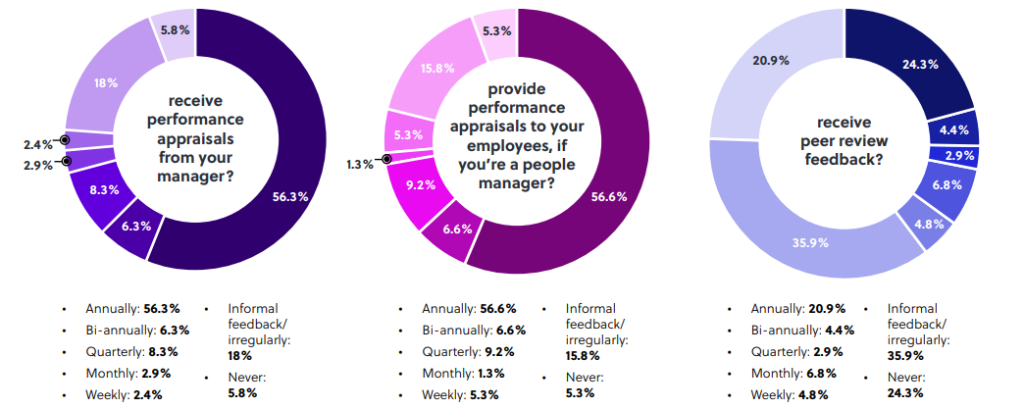
Annual reviews reign supreme, with the majority of healthcare employees indicating they receive and/or provide performance appraisals once a year. About one in five don’t get or give feedback with any regularity—if at all. Incorporating peer feedback can be incredibly valuable, and according to the results of our survey, this is an area of opportunity for improvement in healthcare organizations—especially with the help of talent management solutions that make it seamless to provide and receive ongoing, continuous feedback from both managers and peers.
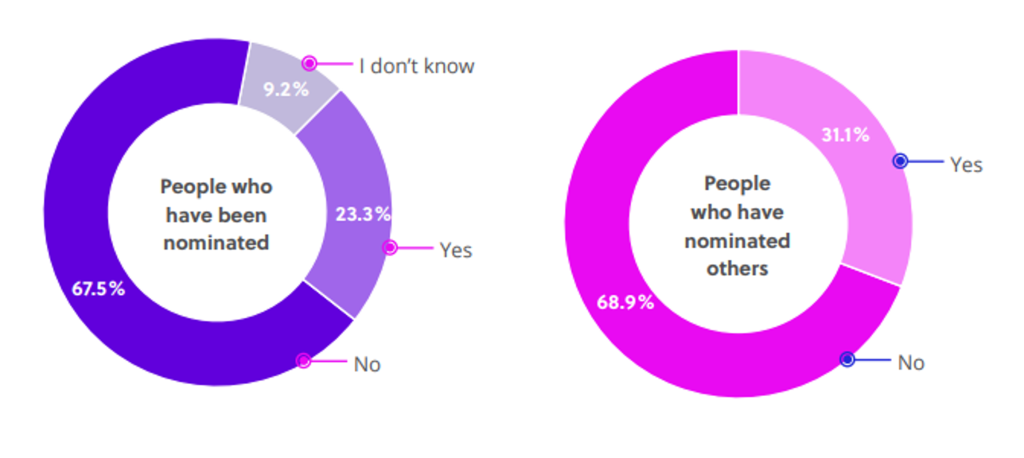
5. Have you ever nominated someone, been nominated for, and/or received an industry award or recognition (e.g., The DAISY Award, Excellence in Medicine, etc.)?
The overwhelming majority, more than two-thirds, of healthcare workers surveyed have never been
nominated for or nominated someone else for relevant industry awards or recognition. These types
of nominations can be a big morale boost and often can come from anyone in, or even outside of, the
employee’s organization.
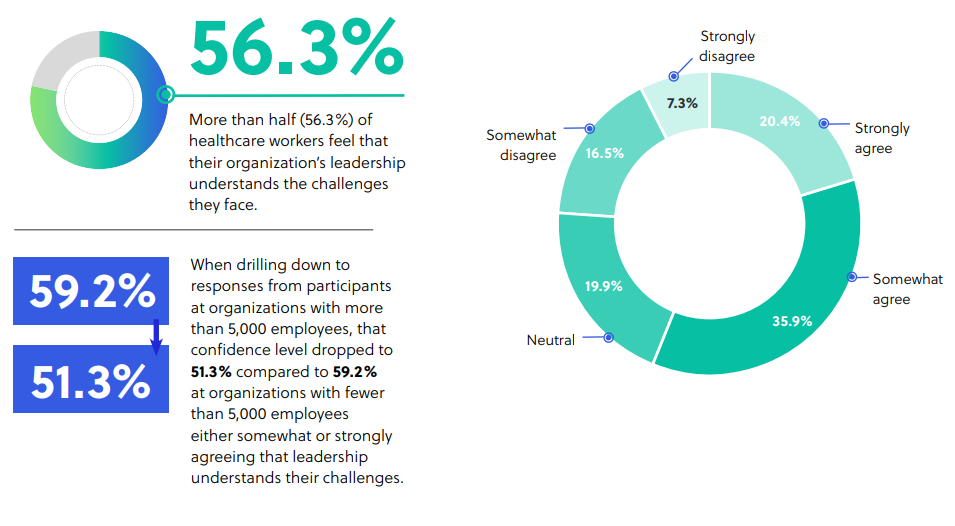
6. Leadership at my organization understands challenges employees face.
- More than half (56.3%) of healthcare workers feel that their organization’s leadership understands the challenges they face.
- When drilling down to responses from participants at organizations with more than 5,000 employees, that confidence level dropped to 51.3% compared to 59.2% at organizations with fewer than 5,000 employees either somewhat or strongly agreeing that leadership understands their challenges.
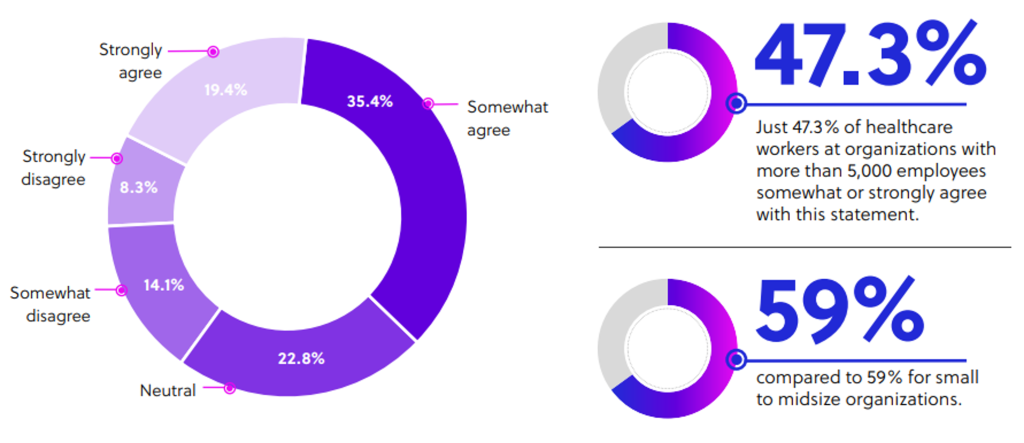
7. Leadership at my organization understands employees’ needs.
Similar to leadership’s understanding of employees’ challenges, a majority of respondents somewhat or strongly agree that their needs are understood. However, there’s a greater divide when it comes to the
size of the organization and respondents’ confidence in leadership.
- Just 47.3% of healthcare workers at organizations with more than 5,000 employees somewhat or strongly agree with this statement.
- Compared to 59% for small to midsize organizations.
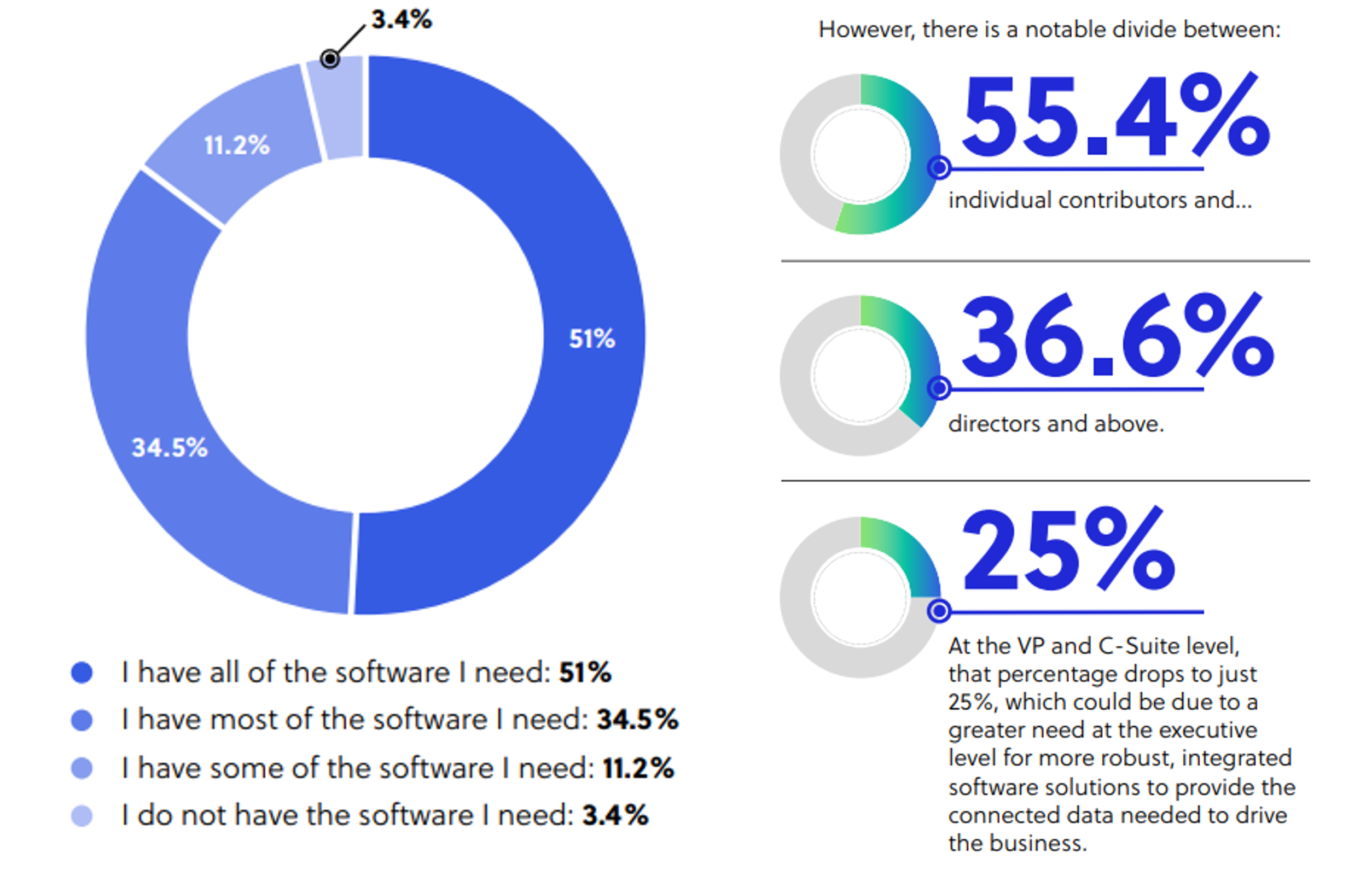
8. Do you have the necessary software available to do your job?
Overall, more than half of healthcare workers surveyed indicate they have all of the software they
need to do their jobs.
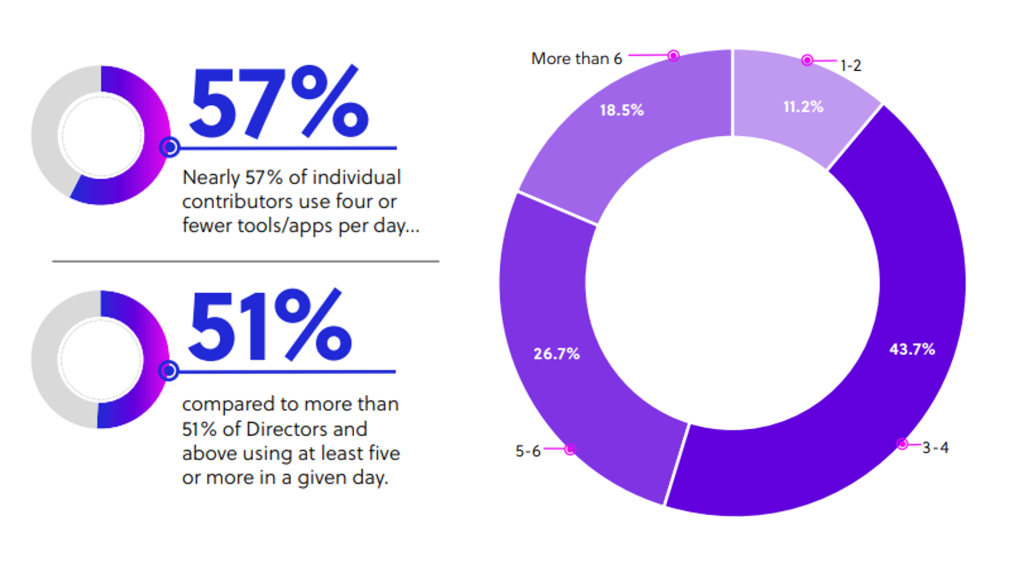
9. How many different tools and applications do you use in a typical day to do your job?
The divide between individual contributors and upper-level management is apparent when it comes to the sheer number of tools and applications used in a typical day.
How leaders keep a pulse on every facet of their workforce
An effective workforce management strategy is invaluable for early identification of staffing issues ranging from training to detecting and mitigating symptoms of burnout and building a succession plan for leadership positions. Having the right resources in the right places can help providers and support
staff do their jobs more efficiently and effectively, thereby removing some of the stress and potentially minimizing turnover.
The COVID-19 pandemic demonstrated the importance of ensuring providers and staff feel safe at work, especially in terms of PPE and organizational adherence to disease-prevention protocols. As a result, supply chain management and visitor management strategies play critical roles in creating a safe and
minimally stressful environment for staff and providers.
Sub-par staffing in healthcare is like an infection: Left untreated, it can spread and affect every aspect of a healthcare organization’s operations. That’s why it’s so important for healthcare leaders to be proactive in hiring, keeping, and growing quality talent as they strive to become an employer of choice. Software solutions play a valuable role in the process. If you need help building a workforce that benefits your patients, your providers and staff, and your organization, get in touch with symplr’s experts for a
free assessment of your needs.


