Customer Story | Dec 2025
How Memorial Health Unified Critical Communications
Customer profile:
Unify hospitals and partners—eliminating silos across the region.
Reach the right team faster for more confident response.
Streamline activation with the same process across every facility.
Adopted system-wide as part of daily operations.
Memorial Health, based in Springfield, Illinois, sits at the center of a tightly connected healthcare community that includes hospitals, outpatient clinics, regional partners, and academic organizations such as Southern Illinois University School of Medicine. This collaborative ecosystem depends on rapid, reliable communication, especially when it comes to activating critical clinical teams where the makeup of team members crosses multiple healthcare organizations.
Recognizing the need for a unified, community‑wide approach, Memorial set out to modernize how its hospitals and other regional partners handled urgent notifications. While the health system needed to replace its deteriorating paging platform, its leaders also saw an opportunity to strengthen communication across the broader region. The resulting transformation blended technology change with community alignment, ultimately giving all providers one consistent way to receive and respond to time‑sensitive alerts.
Each facility within the community used its own methods to activate critical teams. Some relied on operators, others on overhead paging or local telecom systems. In many cases, clinicians had to manually track down on‑call providers and send multiple pages.
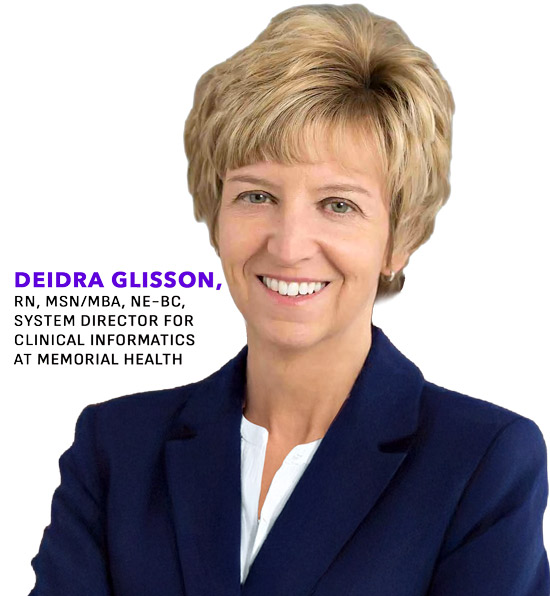
“Every day someone had to look up, ‘Who’s my cardiologist today? Who’s my trauma doctor?’ Then manually page each one and track who had responded,” explained Deidra Glisson, RN, MSN/MBA, NE‑BC, System Director for Clinical Informatics at Memorial Health. “It was time‑consuming, and at times, unreliable.” Memorial’s paging system was also becoming unstable. When it experienced an unexpected outage, the incident accelerated the search for a modern, coordinated solution.
Memorial’s paging system was also becoming unstable. When it experienced an unexpected outage, the incident accelerated the search for a modern, coordinated solution.
Yet the challenge extended beyond Memorial itself. Providers throughout the region worked across organizations, and they wanted consistency.
“Our providers said from the start, ‘We want one app on our phone,’” Glisson shared. “They didn’t want to communicate with Memorial one way and HSHS [Hospital Sisters Health System] or SIU another. It required executive leadership from across the community to come together and align.”
This combination of an urgent internal need and a broader community goal became the foundation for the project.
Memorial first implemented symplr Clinical Communications for secure messaging and scheduling in 2021. These successes helped build momentum for a more ambitious initiative: migrating all critical notifications to a shared platform used by Memorial, SIU, Springfield Clinic, and other partners.
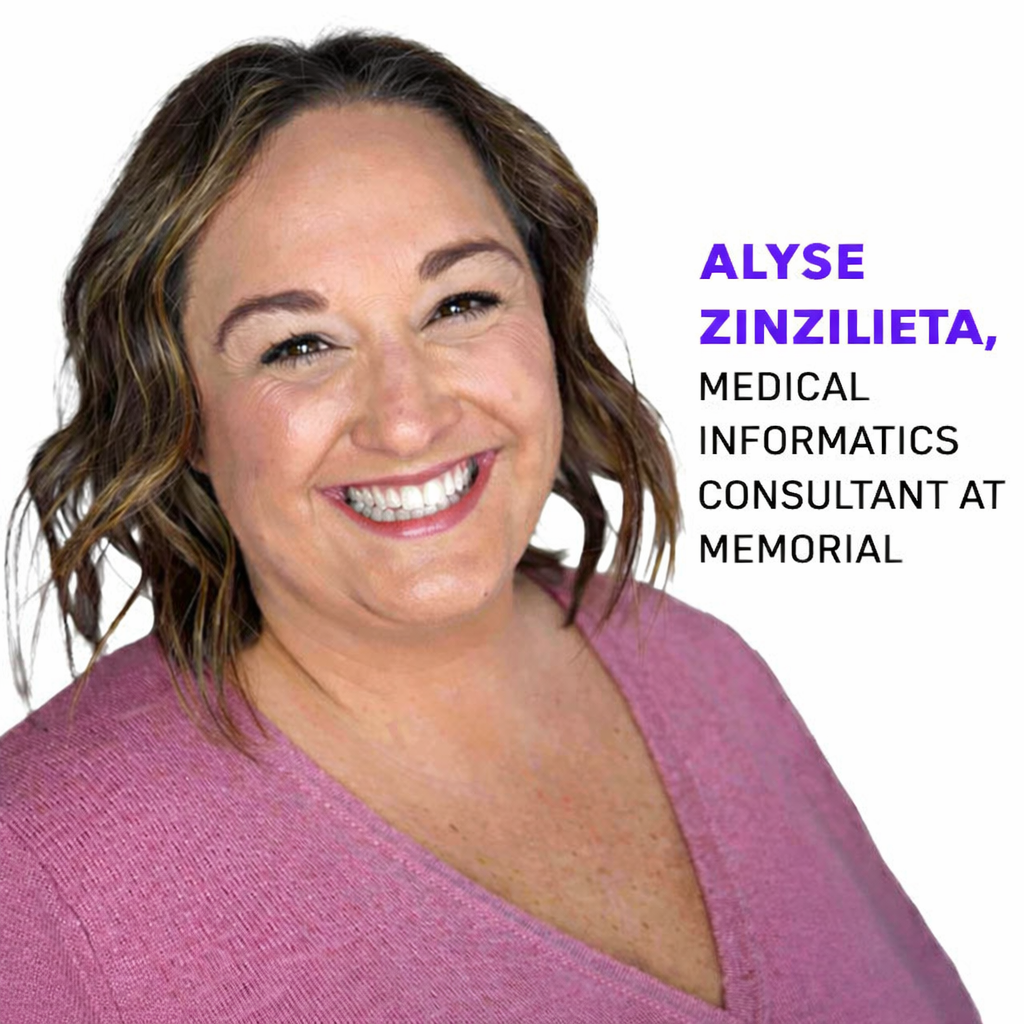
“A lot of work went into linking schedules between systems,” said Alyse Zinzilieta, Medical Informatics Consultant at Memorial. “We worked with SIU to create groups for residents to join, link them to schedules, and ensure everyone could respond reliably.” Zinzilieta, along with Anne Murphy, Manager of Informatics, spent dedicated time with community partners to ensure these groups were built accurately.
This transition empowered the entire Springfield healthcare community to participate in one coordinated response model, uniting providers around consistent workflows and expectations.
“We wanted to move all of our critical notifications outside of the old paging platform,” Glisson said. “Our goal was to eliminate inefficiencies and align communication across the entire health system.”
Implementing critical notifications required extensive coordination, communication, and education. Many clinicians were accustomed to pagers and skeptical of mobile‑based alerts.
“It was a big adjustment for a lot of people,” said Zinzilieta. “There was fear—what if the Internet’s down? What if my phone doesn’t work? We had to reassure everyone and show them the safeguards.”
Memorial eased the transition with a one‑ to two‑week “dual‑notification” period where paging and messaging happened concurrently. Once users grew comfortable, leadership quickly moved to full adoption.
“We pulled the rug out pretty quickly,” Glisson recalled. “Once people saw it worked, leadership agreed there was no reason to delay. Dual work wasn’t sustainable.”
At the same time, the project standardized workflows across multiple hospitals. At Decatur Memorial Hospital (DMH), the transformation was especially meaningful for the call center team responsible for initiating many of the most time-sensitive notifications. Lynn Singleton, Manager of the Call Center at DMH, recalled how manual and fragmented the old process had been.
“Before this change, our operators had to call every responder one by one,” Singleton said.“ Notifying a surgery team could take us 15–30 minutes, sometimes longer. We were making 10–15 separate calls just to deliver the same message.”
The shift to symplr Clinical Communications fundamentally changed that workflow. Instead of juggling lists, dialing multiple numbers, and tracking confirmations manually, operators now trigger a single mobile notification that reaches the entire team at once, with built-in read receipts and automated documentation.
“For us, it now takes about 1–2 minutes,” Singleton explained. “The time savings are huge, but just as important is how much stress it takes off my team. They now have confidence that everyone is getting the same information at the same time.”


“We pulled the rug out pretty quickly. Once people saw it worked, leadership agreed there was no reason to delay. Dual work wasn’t sustainable.”
Deidra Glisson, RN, MSN, NE-BC
System Director for Clinical Informatics at Memorial Health
By migrating critical team notifications to symplr Clinical Communications, Memorial Health and its regional partners achieved:
Community‑wide alignment on a single app and workflow for critical notifications
Elimination of the deteriorating paging system in favor of real‑time mobile alerts
Standardized workflows that improve consistency and reduce errors
Reduced burden on operators, who no longer maintain manual call lists
Richer, more informative critical notifications without character limits
Faster, more reliable team activation across the region
Integrated scheduling and communication for SIU residents and external providers
Strong improvements to emergency response readiness due to rapid, uniform team activation
Operators also benefit from timestamped records, automated accountability, and consistent message formatting, all of which reduce the risk of missed or incomplete notifications. According to Singleton, “Having everything documented automatically means my team isn’t scrambling to keep handwritten logs anymore. It’s made our process safer and more reliable.”
A surgery call-out, which once required a long list of manual phone calls and handwritten tracking, now happens nearly instantly. The entire surgery team can be alerted with a single message, reducing the process from roughly 20 minutes to just about a minute and providing immediate confirmation that every recipient received identical information.
“In the old system, we were limited by character count,” Glisson added. “Now we can include key patient information in the first notification.” Clinicians quickly expanded the solution beyond critical teams, applying it to workflows in the blood bank, anesthesiology, and other departments.
“It’s helped communication beyond just critical teams,” said Zinzilieta. “Now that they’re using the solution, they’re finding new ways to collaborate.” Skeptical providers also came to trust the system once they experienced it firsthand.
“We had some cardiologists and trauma docs who were hesitant at first,” Glisson said. “But after testing and seeing it in action, they became believers. It’s now just part of how we operate.” Today, dozens of critical teams rely on the platform daily, supporting Memorial’s goal of one coordinated, region‑wide approach.
Conclusion
Memorial Health’s migration to symplr Clinical Communications represents more than a technology upgrade. It is a community‑driven transformation that unified regional partners, standardized critical team activation, and created a consistent experience for every provider.
“This project was about trust—trust in each other, in the process, and in the technology,” said Glisson. “Now that everyone’s on board, we can’t imagine going back.”
By embracing a shared platform, Memorial and its partners built a communication system that reinforces their collaborative mission—and ensures clinicians across the community can respond quickly, confidently, and together.
Schedule a consultation today to see how single communications channel can help your staff stay focused and in-the-know, reduce interruptions and fatigue, schedule optimally, and deliver the best care to your patients.