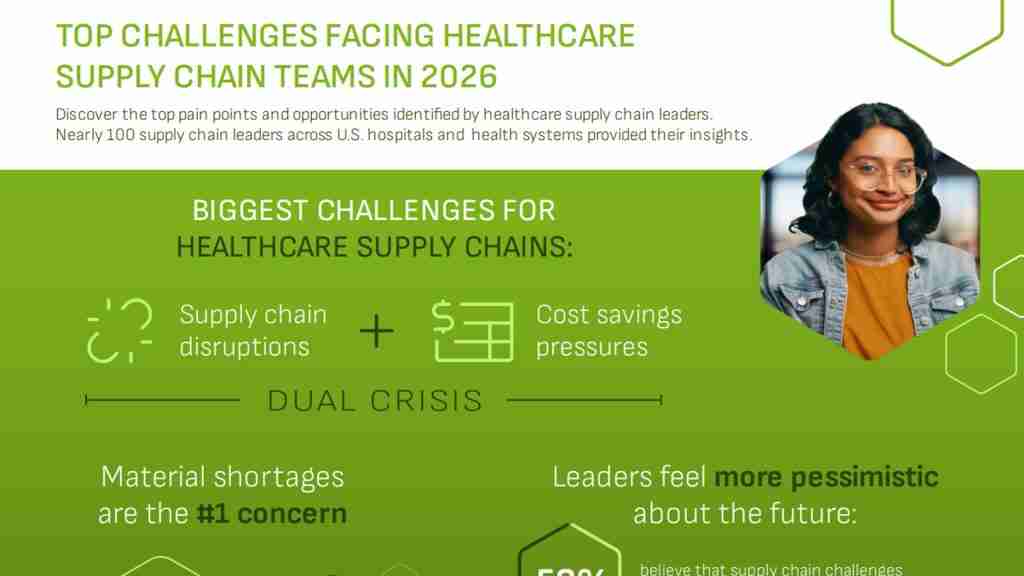
Transforming supply chain operations is critical in responding to the complex challenges of the current and future healthcare landscape. It requires all stakeholders to act on a vision of collaborative financial stewardship by equipping supply chain teams with better tools, technology, and resources – resources that not only lighten their load, but also streamline the evidence-based decision-making process so teams are elevated above managing daily fires to make strategic organizational contributions.
Deciding to improve supply chain operations with a software partner is a start to addressing critical supply chain challenges, but choosing the right partner is not always a simple decision.
Budget, timing, ease-of-use, scalability, breadth, outcomes… these are just a few of the considerations at play when attempting to select a supply chain operations software.
However, healthcare leaders can simplify the selection process from the start by identifying the kind of journey the company provides: will the company serve as a vendor or strategic partner? The first is transactional, while the latter is transformative.
This guide will support an evidence-based evaluation as you explore which approach best meets your organization’s strategic goals.
Ultimately, prior to making any healthcare technology purchasing decisions, it’s important for you and your team to be able to confidently answer questions, including:
Clearly establishing some of the key drivers can be helpful in determining how to proceed, where to look first, and who to involve in the decision-making process.
Key general market forces driving the need for adopting supply chain software:
Key internal processes driving the need for adopting supply chain software:
Any software decision should align with the strategic goals of your organization. Narrowing the “why” behind your reason to explore healthcare operations software will help you set expectations for results, trade high vendor counts for the most appropriate strategic partner, and build the best game plan.
Your supply chain operations project should include an interdisciplinary team that is actively involved in evaluation and decision making. This team should consist of key functional areas where the impact of adopting supply chain software will be most experienced as well as strategic leadership to define vision. The following example outlines the types of expertise each role brings to ensure your project is clinically integrated, operationally feasible, and financially justified:

Define overarching supply chain vision: Align key department heads to address and focus on key priorities to drive strategy and decision.

Define overarching supply chain vision: Align key department heads to address and focus on key priorities to drive strategy and decision.

Define pain points in the values analysis and new product introduction process; Lead user feedback for process improvement.

Define overarching supply chain vision: Align key department heads to address and focus on key priorities to drive strategy and decision.

Ensure key businesses needs are represented with functional area of expertise; Representation from materials management, strategic resourcing, clinical resource management, vendor relations, purchasing, contracting, compliance, etc. as needed.

Define overarching supply chain vision: Align key department heads to address and focus on key priorities to drive strategy and decision.
*All health systems are different. If a role listed is not in your organization, replace with an equivalent one.
Nearly 9 in 10 healthcare executives believe that disconnected clinical, operational, and financial systems keep them from doing their jobs efficiently. With the right partner, organizations can proactively build a strategic, sustainable process guided by the data, insights, and digital tools needed to make informed, accelerated, compliant, and quality-driven decisions across the supply chain.
Whether you’re moving from manual processes to a software solution or transitioning to a different software partner altogether, change is a major investment. It can be burdensome, and if done without proper planning, can easily end up sucking resources away from your strategy rather than fueling it.
As a result, not unlike what supply chain leaders do when considering introducing a new piece of medical technology, looking at the total investment of a software, both the cost and the value, is critical. When researching healthcare supply chain software, here are some of the most important points to evaluate.
With the rise of vendor consolidation, there has also been an increase in vendors who “do supply chain software.” However, healthcare is complex, so be comprehensive when evaluating generalists who say they can do it all. Healthcare requires specific workstreams, from physician contracting to supply chain workflows, that are nuanced and demand high levels of compliance. When evaluating partners, be sure they understand the intricacies of healthcare and are grounded in the common goal of improving patient outcomes.
During your review, ensure the software vendor:
Siloed solutions struggle to meet the mark in today’s broader healthcare ecosystem. From an initial medical rep visit to ongoing contract management and everything in between, there are unique yet dependent workflows and data sets that unfold. As a result, many healthcare organizations are looking beyond point solutions to systematically protect their workforce experience and address their complex, multi-faceted needs with an enterprise vendor. Here are some key areas to consider when assessing an end-to-end supply chain operations software partner to help support standard processes throughout your organization:

*symplr is GPO agnostic and is complementary to GPOs, not a service replacement.
It’s important to clarify what role you will play within your vendor’s ecosystem during your decision-making process. When in discussions with potential software vendors, ask specific questions around exactly what engagement looks like throughout your partnership. Support is a foundational expectation. What else do they offer to make it a true partnership, not just a contractual vendor agreement? With the complexity of today’s healthcare ecosystem, organizations seek more than basic support. A strategic partner should provide:
This is one of the most critical points of evaluation. Healthcare supply chain is complicated, and ideally, software should make it simpler. However, success does not occur overnight. Request a detailed project plan that aligns with your organizational goals to successfully navigate you through planning, designing, executing, and closing out of the implementation process. Also be sure it follows a consultative approach and has an established timeline.
Additionally, before any decisions are made, it is imperative to understand what will be required of you and your team during the process so you can allocate resources accordingly.
Plan
Design
Execute
Close
When it comes to healthcare, experience matters. Has the vendor had demonstrable results in the specific area(s) of supply chain you are looking to optimize?
Consider the following:

Aligning your core stakeholder needs with the strategic vision of your organization will be the guiding light to setting your organization up for success when making a software decision. At the end of the day, when adopting healthcare operations software for your supply chain, you embark on a journey with the company and solution you select. A strategic partnership isn’t transactional – it is inclusive, consultative based on your team’s needs and larger vision, and reaps the greatest reward for your healthcare organization.

2026 State of Healthcare Supply Chain: What This Year’s Results Tell Us About the Road Ahead

Health First & Nebraska Methodist: A Blueprint for Value Analysis Excellence